AI in 2026: A Practical Microsoft-Led Guide for Organisations Planning Ahead
Introduction
Artificial Intelligence has moved rapidly from curiosity to capability. As organisations look ahead to 2026, the conversation is no longer about whether AI should be adopted, but how it can be embedded responsibly, securely and with genuine business value.
Microsoft is now embedding AI across Dynamics 365, Business Central, the Power Platform and Microsoft Fabric, with Copilot increasingly acting as the way users experience and interact with AI across these platforms. This marks an important transition. AI is no longer something organisations experiment with on the side, but a capability becoming embedded into everyday systems, workflows and decision making.
For finance teams, service teams and nonprofit organisations, this presents a significant opportunity. It also raises an important question. How do you approach AI in a way that delivers real impact rather than noise?
This guide explores what Microsoft’s AI direction means in practice and how organisations can build the right foundations to make AI work for them in 2026 and beyond.
From experimentation to everyday AI
Over the last few years, many organisations have explored AI through pilots, proof of concept initiatives or isolated tools. As we move into 2026, that experimental phase is giving way to something more meaningful.
Microsoft’s focus is on embedding AI directly into the platforms people already use, with Copilot becoming a natural part of day to day workflows rather than a separate tool. Rather than asking teams to learn entirely new tools, AI is designed to support existing roles across finance, operations, service delivery and nonprofit engagement.
This shift changes the challenge. Success is no longer about access to AI. It is about whether your organisation is ready to use it effectively.
What AI in 2026 looks like for Microsoft customers
AI becomes part of everyday roles
In 2026, AI is increasingly woven into daily tasks rather than sitting alongside them. In practical terms, this means finance teams being supported by AI driven insights and automation, service and operations teams benefitting from smarter case handling and prioritisation, and nonprofit organisations gaining deeper insight into supporters and programmes.
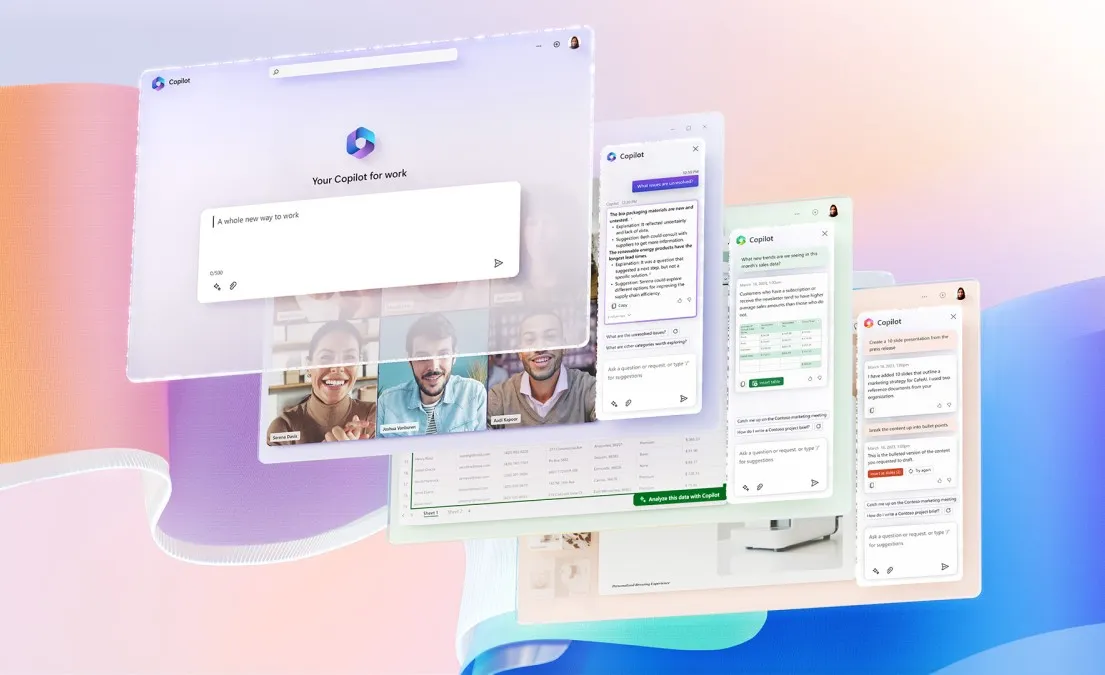
The real value lies in AI working quietly in the background. Through Copilot, users can surface insights, summaries and recommended actions directly within the tools they already use, helping them make better decisions while reducing manual effort.
Data quality becomes non negotiable
One of the most important realities of AI is also the simplest. AI is only as good as the data behind it.
Microsoft’s AI capabilities rely on structured, consistent and connected data across platforms such as Dataverse and Microsoft Fabric. If data is duplicated, incomplete or poorly governed, AI outputs will reflect those issues.
In 2026, data quality has moved from a nice to have to a critical foundation for success.
Governance and trust take centre stage
As AI becomes more embedded, organisations must be confident it is being used responsibly. This is particularly important for public sector and nonprofit organisations where trust, transparency and compliance are essential.
Microsoft has placed responsible AI, security and compliance at the heart of its approach. For customers, this means understanding how AI accesses and uses organisational data, how permissions and environments are managed, and how transparency and accountability are maintained.
Trust is not a barrier to AI adoption. It is what enables it.
What this means for different teams
ERP and finance teams
AI in finance is about confidence rather than complexity.
For finance teams using Dynamics 365 Business Central, AI in 2026 is supporting forecasting and scenario planning, faster access to insights and reporting, and reduced manual processing and reconciliation. Copilot plays a key role by allowing users to interrogate financial data in plain language and act on insights more quickly.
These benefits depend on consistent finance data, clear structures and reduced reliance on spreadsheets. AI amplifies what already exists, whether that is strong foundations or underlying issues.
Nonprofit organisations
AI should enhance impact without replacing the human touch.
For nonprofit organisations, AI has the potential to improve supporter insight and engagement, strengthen case and service management, and reduce the administrative burden on teams. Copilot can support this by helping teams quickly summarise information, surface trends and focus more time on delivering impact.
Using solutions built on the Microsoft Common Data Model, such as mhance Nonprofit Core, helps ensure data is structured, connected and ready to support AI driven insight while maintaining trust and transparency.
The AI readiness reality check
Before thinking about AI features or tools, organisations planning for 2026 should take a step back and ask some fundamental questions.
Is your data consistent, structured and trusted? Are your systems connected or still operating in silos? Do you have clear ownership of data, security and governance? Are your people confident using the systems they already have?
Answering these questions honestly often highlights that AI readiness is as much about foundations and people as it is about technology.
How Microsoft is supporting AI adoption
Microsoft’s approach to AI, including Copilot, is built on three core principles. Security by design to protect organisational data. Responsible AI to ensure transparency and accountability. Embedded intelligence that integrates AI into the everyday tools people already use.
This approach provides a strong platform for organisations adopting AI in a controlled, compliant and sustainable way as they move into 2026.
How mhance helps organisations prepare for AI in 2026
At mhance, we work with organisations across finance, nonprofit and public facing services to help them get the most from their Microsoft investment.
Rather than treating AI as a standalone capability, we focus on building the foundations that make it valuable. This includes strong data models and governance, secure and well structured Dynamics 365 and Business Central environments, clear roadmaps aligned to organisational goals, and practical change management and user adoption.
AI success in 2026 does not come from simply switching on a feature. It comes from making informed and strategic decisions.
Looking ahead to 2026
AI is not a destination. It is an evolution. In 2026, the most successful organisations are those grounding their AI strategies in strong data, clear governance and confident people.
By focusing on readiness rather than hype, organisations can ensure AI becomes a meaningful enabler that supports better decisions, improved efficiency and greater impact.
AI readiness for 2026
Before investing further in AI capabilities, it is worth assessing how ready your organisation really is.
Consider your data quality and structure, your governance and security approach, how well your systems are connected, and how confident your people feel using the tools they already have.
If you would like support reviewing your Microsoft environment and planning a practical AI roadmap for 2026, get in touch with mhance to start the conversation.